
Let’s be honest: most meal plans look great on Sunday.
You write down a week of meals, feel organized, and imagine yourself calmly cooking everything according to plan.
Then real life happens.
You work later than expected. The fridge doesn’t contain what you thought it did. You’re too tired to cook. Someone suggests takeout. Suddenly it’s Thursday and you’ve made one meal from your carefully planned week.
If this happens to you, the problem isn’t that you’re bad at meal planning.
The problem is that most meal plans are built for perfect weeks.
Real life isn’t perfect.
A good meal plan should be flexible enough to survive a busy week.
Here’s how.
The biggest meal planning mistake: treating the plan like a schedule
Many people approach meal planning the same way they approach a calendar.
Monday = pasta
Tuesday = soup
Wednesday = tacos
Thursday = stir-fry
The problem?
Meals aren’t appointments.
You don’t have to cook pasta on Monday just because you wrote “pasta” on Monday.
Instead, think of your meal plan as a menu of options for the week.
Maybe you planned five dinners.
Great.
Now choose the one that fits your energy level and available time each day.
This single mindset shift makes meal planning feel much less restrictive.
Plan for low-energy days before they happen
One reason meal plans fail is that we tend to imagine our future selves as much more motivated than we actually are.
When planning, ask yourself:
“What will I realistically want to cook after a long day?”
Not:
“What sounds healthy and ambitious right now?”
A good weekly plan usually includes:
- 1–2 meals that require a little more effort
- 2–3 very easy meals
- 1 emergency meal
Your emergency meal should require almost no thinking.
Examples:
- noodles with frozen vegetables
- pasta with tomato sauce
- wraps with hummus and vegetables
- grilled cheese and soup
- rice with tofu and frozen vegetables
These meals exist to save the week.
Create a “too tired to cook” list
This is one of the simplest tools I know.
Keep a list of 10 meals that:
- take less than 20 minutes
- use ingredients you often have
- require very little decision-making
When you’re exhausted, don’t search Pinterest.
Don’t scroll through recipes.
Don’t start planning from scratch.
Just pick something from the list.
The goal is to reduce decisions.
Stop planning meals. Start planning ingredients.
This is where meal planning becomes much easier.
Instead of planning seven completely different meals, prepare ingredients that can be used in multiple ways.
For example:
Sunday prep
- chickpea salad
- roasted vegetables
- cooked quinoa
Now you can create:
Monday:
- chickpea sandwich
Tuesday:
- quinoa bowl
Wednesday:
- wrap with chickpea salad
Thursday:
- roasted vegetable bowl
Friday:
- leftover lunch plate
One prep session.
Multiple meals.
Much less work.
Always leave room for leftovers
Many meal plans fail because they assume you’ll cook every day.
Most people don’t.
When planning your week, intentionally leave some flexibility.
Maybe Tuesday’s dinner becomes Wednesday’s lunch.
Maybe Thursday becomes leftovers night.
That’s normal.
A flexible plan works better than a perfect one.
Don’t start over when one day goes wrong
This is probably the biggest mistake of all.
You skip one planned meal and suddenly think:
“I’ve ruined the plan.”
You haven’t.
Meal planning isn’t all-or-nothing.
You don’t need to restart.
You simply adjust.
One missed meal doesn’t mean the entire week is a failure.
The goal isn’t a perfect plan
The goal is to make everyday cooking easier.
A successful meal plan isn’t one that gets followed perfectly.
It’s one that helps you spend less time deciding what to cook and makes busy weeks feel a little less stressful.
If your plan bends but doesn’t break, it’s working.
Want a simple system for flexible meal planning?
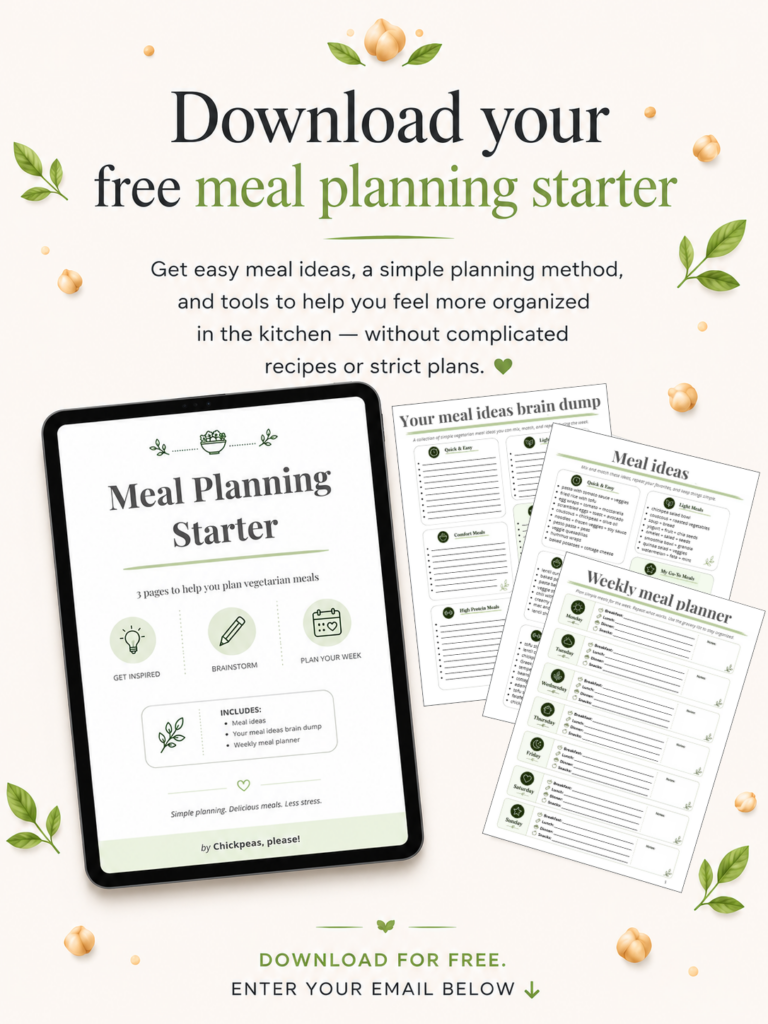
Download the free Meal Planning Starter and learn how to organize meal ideas, create flexible weekly plans, and stop overthinking what to cook.





Leave a Reply